
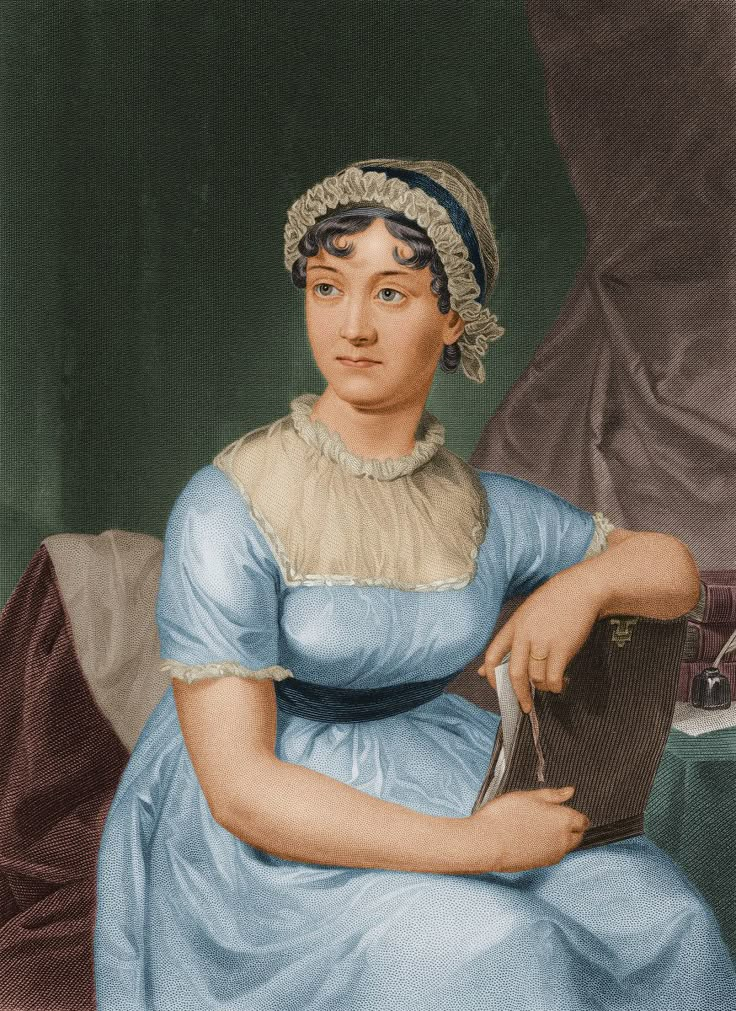
Jane Austen, born December 16th, 1775, in Steventon, Hampshire, England, will forever be marked as one of the greatest classic authors in the vast world of classical literature. Defined by her extensive more notable novels, she has remained a significant role model for the vast majority of modern-day authors, leaving herself a reputation of greatness. Jane Austen’s novels provide not only an outlook on what life was like for 18th-century women but also show how terribly corrupt English society was during that time. Her novels challenged the traditional values of her time with flair and wit, perhaps even aligning with issues in modern society.
Despite the large array of novels Austen fed the world with at the time, her most prominent and well-received piece of work was ‘Pride and Prejudice’, a novel entailing the life of a young woman named Elizabeth Bennet, who, within her large family’s wild antics and inferiority by rank and circumstance, navigates old English society along with her 4 sisters. However, Elizabeth was not the stereotypical female protagonist that was often adopted during literary pieces at the time; she was not blessed with alluring beauty, nor was she upholding any status-based power; she was simply a bold and witty woman with charisma. Austen’s works truly explore this old society while simultaneously critiquing traditional gender roles by writing up characters like Elizabeth, who in contrast with her sister, does not properly fit into the shared standard at the time, empowering women.
Jane Austen’s family was not necessarily wealthy, but was sustainable. While Austen did receive an education at ‘Reading Abbey Girls School,’ most of her schooling stemmed from her father’s library, which had access to over 500 volumes-many which she would read. When Jane was 26, her father eventually retired and moved his wife and daughters to Bath,unfortunately selling most of his extensive library as a result.
Following her father’s retirement and the family’s relocation to Bath, Austen experienced a period of inspiration. Although Bath exposed her to new environments that would later influence settings within her novels, it was not considered her most productive period. After her father’s passing in 1805, Austen, her mother, and her sister Cassandra were facing major financial issues, leading her to settle in Chawton Cottage in Hampshire. It was there, where Austen wrote her most famous works.
Despite her remarkable literary abilities, Austen did not experience overwhelming fame during her lifetime, as her novels were initially published anonymously and labelled merely as “By a Lady” with little to no indication of who she truly was.
Unfortunately, Austen’s later years were laced in severe health issues, where her wellbeing began to deteriorate. However despite her alarming condition, her persistence and passion to write never flickered, and she proceeded to publish Persuasion in 1917, and began the unfinished novel Sanditon. Managing to write around 12 chapters before her death.
On July 18th, 1817, aged 41- Jane Austen had sadly died in Winchester with her novel unfinished yet her legacy solidified. Jane Austen’s works have continued to be appreciated even in modern day and serve as some of the most entailing and powerful pieces of English literature. It was only after her death, that her authorship was publicly acknowledged by her brother Henry, and she was known as more than a mere ‘Lady’ but as ‘Jane Austen’-a remarkable literature legend.