
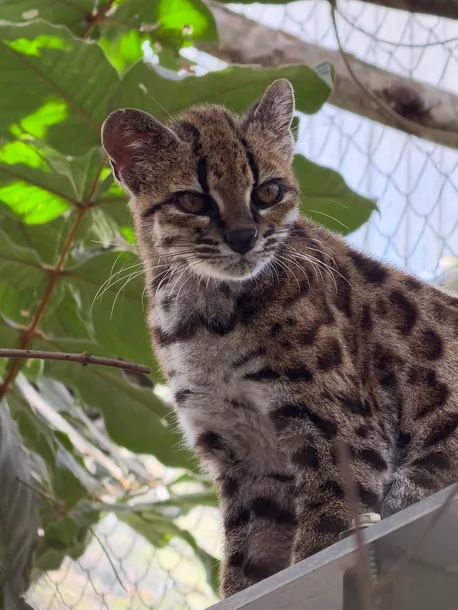
In September this year, in the cloud forests of Bolivia, researchers from the Senda Verde Wildlife Sanctuary discovered the first new mammalian feline in over 100 years: the Leopardus Tilcayo cat, or, for short, the Tilcayo Tiger cat.
The Tilcayo cat is a lot smaller in size compared to the average cat- and even some common house cats! They measure just under half a metre long, and weigh around 1 and a half kg, making them light and quite agile as a result. Some characteristics of the Tilcayo Tiger cat are that it has short, rounded ears, long whiskers, and a coat featuring leopard-like spots across their fur. They differ from other cats by having a low-contrast fur colour and a tail that is less bushy than its cousin, the Leopardus pardinoides.
The Tilcayo Tiger cat lives in the Yungas region of Bolivia, in a high-humidity mountainous ecotone where the Andes Mountains meet the Amazon Basin. Genomic comparisons across the genus Leopardus show that the Leopardus Tilcayo lineage came from other tiger cats, approximately 1.4 million years ago, during the early Pleistocene.
Genetic modelling suggests that the species has faced a population decline of over 63%, which is a huge loss since researchers have just discovered the first feline in over a century, and it is already endangered. Thankfully, scientists are doing the best they can to help bring these species off the endangered list.