
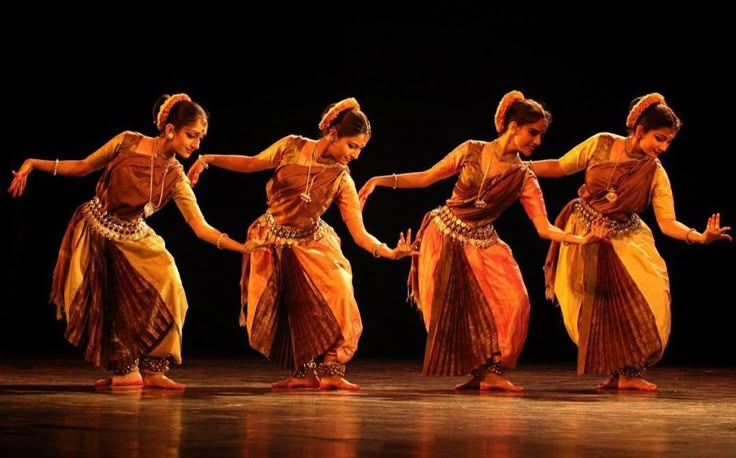
I was five when I began training in Bharatanatyam, one of the oldest classical dance forms of India. It comprises hand gestures (hastas) and facial expressions (abhinaya) to narrate stories and communicate. I had always wondered why, at recitals, the audience sat in complete darkness while the performers stood illuminated on stage. It wasn’t until I recently performed in a recital myself that I began to understand how every small detail shapes the way people experience a story and, in doing so, connect them.
The auditorium was filled with people from all walks of life. Some arrived curious and excited, while others seemed distant and reluctant. Children who had recently begun learning Bharatanatyam ran around, trying to catch glimpses of backstage rehearsals. Elders sat quietly, reminded of times when they themselves had performed. Each person had walked in with a different story, state of mind, and expectation of what the evening would bring. Yet they all had come to watch the same performance.
I wondered how such a varied audience could ever experience it together. Then the auditorium fell into pitch darkness. It was no longer divided into sections, and the sea of people seemed to become one quiet, waiting presence. As the orchestra began playing and the dancers stepped onto the stage, I realised the first step any artist takes, whether background builders, dancers, or musicians, is to create a shared experience, not by making people the same but by giving them a way to feel together. I saw this connection mirrored among the artists too. The ages of the artists ranged from high school seniors to mothers reconnecting with long-lost dreams.
Some dancers arrived straight after writing college applications, while others came after feeding their families. Many approached the performance emotionally, while others focused more on technical aspects. As I stood among them, I was no longer observing this connection… I was a part of it. Despite these differences, the shared love for art brought everyone together, allowing us to create something larger than ourselves. On stage, it felt as though the clutches of difference could never reach us there.
Our bodies followed the intricate balance between sharp precision and fluid grace. As we began the storytelling, every expression shifted in rhythm like waves responding to the same tide. Meaning passed between us instinctively, something the audience could only admire from afar. It became clear to me that connection didn’t require similarity, but a willingness to step into perspectives beyond their own. While I began to understand what the artist creates in the audience, I had not yet understood what the process would mean for me. As I stepped into the role, I was no longer just myself. I began portraying my character, the antagonist of the story, who I knew was deeply flawed.
Yet somehow, those flaws no longer felt distant. I didn’t simply dress, speak, or act like the character; I began to see the world the way she did. I understood how her choices could make sense to her, even if I would have judged them from outside. I no longer thought it right to reduce her to just a “villain”, not because I thought her mistakes were justified, but because I could feel what she might have felt.
The performance ended, and although I was no longer portraying the character, I carried with me a new lens through which I could see the world. I found myself more willing to understand people who reminded me of the character I had once judged. This experience revealed how every art form in the world has always been about teaching people the ability to accept ideas, values, and cultures not by erasing our differences, but by allowing us to understand them. Through Bharatanatyam, I have learned that art acts like a bridge between differences. That darkened auditorium still lingers in my mind, a space where strangers did not become the same, but learned how to feel together.